Conching is hours or days of warm mixing after the cacao and sugar are ground. Air and heat carry off moisture and volatile acids left from fermentation, and the motion coats every particle in cocoa butter, so the chocolate tastes rounder and feels smoother.
Rodolphe Lindt built the first conche in Bern in 1879. Craft makers today conche anywhere from a few hours to two or three days.
 10:20
Before 1879, eating chocolate was coarse and a little gritty. That year in Bern, Rodolphe Lindt built a machine that rolled a granite roller back and forth through a granite trough of warm chocolate for hours. The result melted on the tongue, and his machine, the conche, named after its shell shape, is still the step that decides how smooth and how sharp a bar tastes.
What actually happens in the conche
By the time chocolate reaches the conche, the nibs and sugar have been ground fine. Conching keeps that liquid warm and moving, and three things happen at once.
- Acids leave. Fermentation leaves volatile acids like acetic acid in the bean. Air moving over warm chocolate carries some of them away, along with moisture. Less vinegar, more chocolate.
- Particles get coated. The motion spreads cocoa butter over every grain of sugar and cacao, so the chocolate flows better and feels smoother.
- Flavors settle. Heat and oxygen soften harsh notes and let the rest blend.
Dark chocolate is usually conched hotter than milk chocolate, up to about 80 °C, while milk chocolate stays near 49 °C.
| Who | How long |
|---|---|
| Dick Taylor Craft Chocolate | 24 to 48 hours |
| Dandelion Chocolate, 2015 experiment | 48 hours in a 200 kg rotary conche |
| Industrial rotary conches | Under 12 hours for batches of several tons |
| Some long traditional runs | Up to 78 hours |
A choice, not a fixed recipe
Here is where makers differ. A long conche gives a silky, mellow bar where the origin speaks softly. A short one keeps the bright, fruity edges a Madagascar or Tanzanian bean is famous for, at the cost of a little sharpness.
Dick Taylor runs the conche dry for the first 24 hours on a defatted chocolate flake, then adds more cacao liquor and speeds the machine up to work air through it, for 24 to 48 hours in total. In a 2015 write-up, Dandelion described a separate 48-hour run in a rotary conche. In a second experiment it noted that its stone melangers do refining and conching together, which is how many small makers work: one machine grinds and stirs for a day or two.
What it means when you taste
A bar that tastes sour in a harsh, vinegary way, rather than a fruity one, often needed more time in the conche or better fermentation upstream. A bar that is smooth but strangely quiet may have been conched past the point where its origin could still speak. The best bars find the middle: smooth enough to melt cleanly, lively enough that you could guess the country.
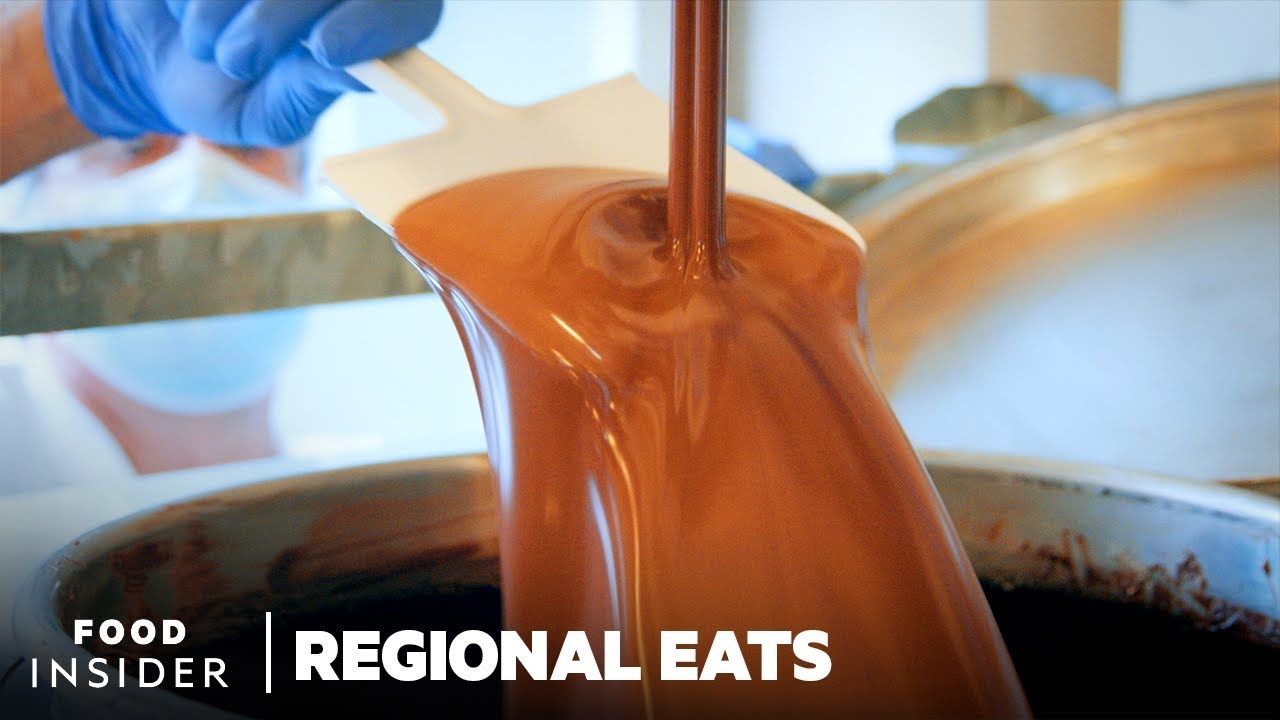
Insider's visit to Favarger in Geneva has some of the best conche footage we know, if you want to see the machine at work.
Questions
What is conching?
A long, warm stir of liquid chocolate after grinding. It removes moisture and volatile acids and coats the particles in cocoa butter, which mellows flavor and smooths texture.
Who invented conching?
Rodolphe Lindt, in Bern, Switzerland, in 1879. His conche was a granite roller rocking through a granite trough.
How long is chocolate conched?
It varies. Dick Taylor conches 24 to 48 hours, Dandelion ran a rotary conche for 48 hours in a 2015 experiment, and industrial machines can finish big batches in under 12 hours.
Is longer conching always better?
No. Longer conching gives a smoother, milder bar. Shorter conching keeps more of the bright origin character, which many craft makers want.