Under US rules, semisweet and bittersweet chocolate must contain at least 35 percent chocolate liquor, and the two names are interchangeable. Sweet chocolate needs at least 15 percent. "Dark chocolate" is not defined at all.
So the most useful label details are the ones the law does not require: the percentage, the origin and a short ingredient list.
Recipes ask for bittersweet, baking aisles sell semisweet and craft bars say dark, so most people assume these are three steps on a ladder. In the US, the ladder has only two legal rungs, and dark is not one of them.
What the federal standard says
The rules for chocolate live in Title 21 of the Code of Federal Regulations, Part 163. The section that matters here, 163.123, Sweet chocolate, sets these minimums:
| Name on the label | Chocolate liquor, minimum | Other limits |
|---|---|---|
| Sweet chocolate | 15% | Under 12% milk solids |
| Semisweet chocolate | 35% | Under 12% milk solids |
| Bittersweet chocolate | 35% | Under 12% milk solids |
| Dark chocolate | Not defined | None |
Semisweet and bittersweet share one definition. A brand can call the same 55 percent bar either one. In practice many makers save bittersweet for their less sweet bars, but that is habit, not law.
The standard also allows optional ingredients. Emulsifiers like lecithin are permitted up to 1 percent of the weight. Spices and flavorings are fine as long as they do not imitate chocolate, milk or butter. Cocoa treated with alkali has to say "processed with alkali".
Chocolate liquor, decoded
Chocolate liquor is ground cacao nib, which turns liquid because a nib is about half cocoa butter. The percentage on a craft bar is chocolate liquor plus any added cocoa butter, which is why a 70 percent bar comfortably clears the 35 percent line twice over.
Where dark fits
Because dark has no definition, a 40 percent bar and a 90 percent bar can both use the word. That is not a scandal. It just means the word is doing marketing, and the number next to it is doing the work.
What to read instead
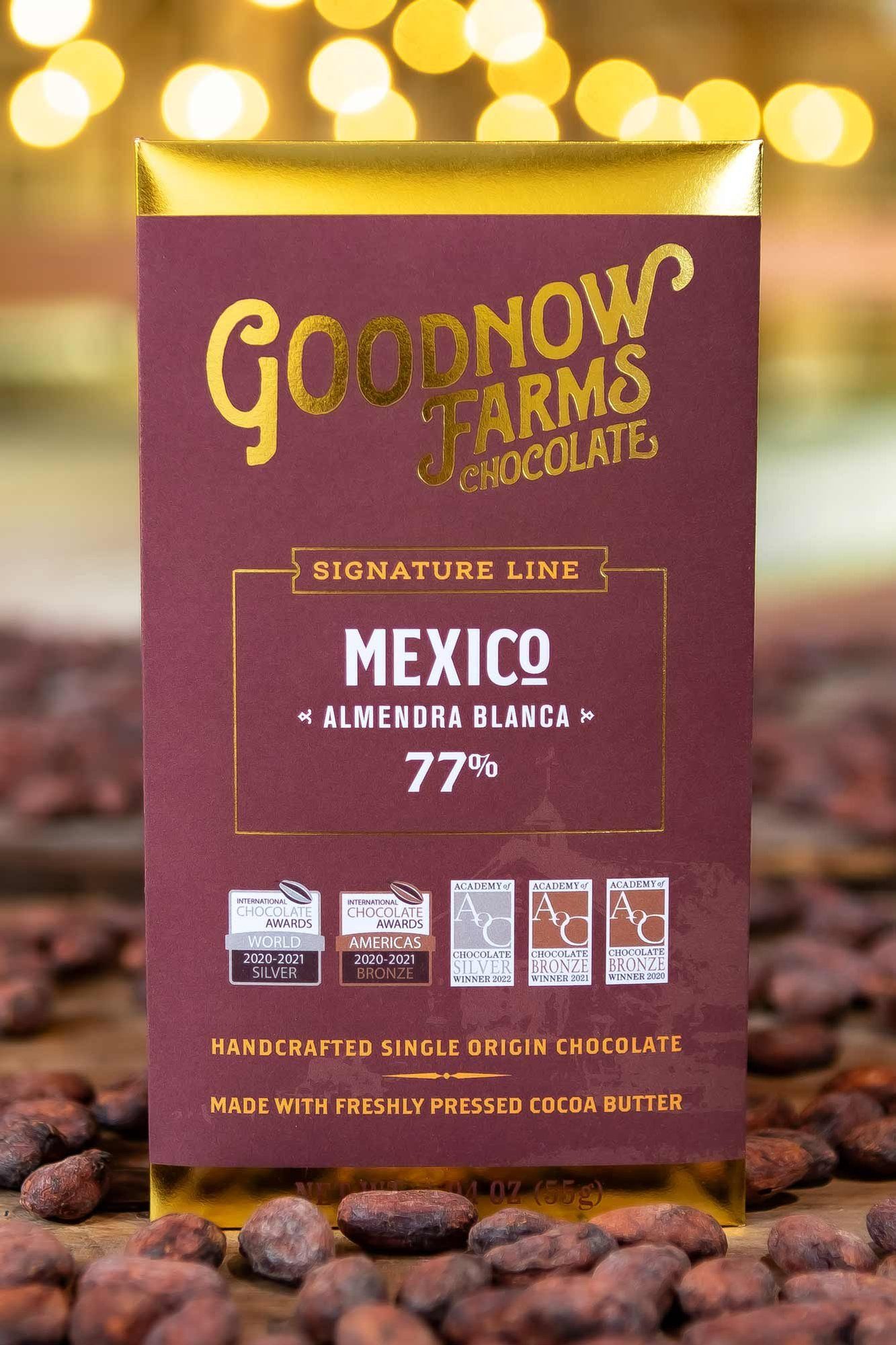
Craft makers put the real information on the wrapper voluntarily. Dandelion's Zorzal Comunitario lists the percentage, the origin, the harvest and two ingredients. Askinosie's 72% Mababu spells out that its cocoa butter is pressed in its own factory from the same Tanzanian beans. Goodnow Farms names the Q'eqchi' Maya association that grew and fermented its Asochivite cacao.
None of that is required. All of it tells you more than bittersweet ever could. When a wrapper gives you a percentage, a place and a short list, you can skip the adjectives.
Questions
What is the difference between bittersweet and semisweet chocolate?
Legally, none in the US. Both need at least 35 percent chocolate liquor. Makers tend to use bittersweet for less sweet bars, but it is a convention, not a rule.
How much cacao is in dark chocolate?
There is no legal minimum for dark. Craft dark bars usually run 65 to 85 percent and print the exact number.
Can chocolate contain emulsifiers?
Yes. US rules allow emulsifiers such as lecithin up to 1 percent of the chocolate's weight.
What does chocolate liquor mean?
Ground cacao nibs, liquid from their own cocoa butter. It is pure cacao, and the word is old trade language.